Showing posts with label fedora. Show all posts

Tuesday, June 3, 2014

FUDCon APAC Beijing - day 1 (Robert Mayr)

When my alarm clock woke me up I was still very tired, but after a few minutes I realized I were in Beijing and had to go to the Beihang University for the first day of FUDCon. (yes I'm a lazy guy...)
The building is really impressive, and after registration I wanted to meet also the other guys who came to the event. I saw a lot of volunteers working around the booth and immediately thought that co-hosting the conference with GNOME.Asia was a very good idea, because it made the event much bigger.

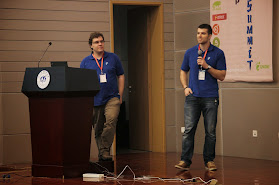
After the Welcome Speech and a short overview of GNOME 3.12 held by Tobias Mueller, it was the turn of Jaroslav's and Jiri's Fedora Keynote. There were a lot of people who weren't contributors, so talking about Fedora.next was not very easy for them, but I think they presented it the right way and I really enjoyed it.
Once the Keynotes finished I went to another room where Nitesh talked about Fedora Videos. The talk was interesting although I already saw his talk at FLOCK in 2013.
After Nitesh it was my turn, I talked about Fedora Websites, what the websites team does and how the sites work. I explained also the build process and Internationalization, trying to keep the discussion as easy as possible to involve also the non-contributors who were listening. At the end I talked about the changes due to Fedora.next and showed some screenshots of how the Fedora websites will probably look like. People seemed very impressed and I was somewhat happy they appreciated the work we are doing.
For lunch we went to the students canteen, where we ate rice dishes and some vegetable. After the lunch...beer in the hotel :)

In the afternoon I listened to Aditya's talk about Ansible and Zamir Sun's brief introduction to firewalld. The last two talks I wanted to hear were in chinese, so I jumped from one to the others and finished with the lightning talks.

In the evening we went to a nice place near the University, therefore many young people were there and we had a lot of fun. The Steps Bar had probably the biggest pizza in Beijing, some nice Chicken Burgers and obviously....a lot of beer (the glass in the foto contains 3 liters)!!!

Evening was short, we had to catch the last subway, but I was also very tired.


FUDCon APAC Beijing - day 2 (Robert Mayr)

The second day I was too pessimistic, the trip to the University was much faster as I believed and I also knew perfectly where I had to go, all this made me arrive 20-25 minutes earlier than expected. I was surprised that some people asked me about the websites and wanted to get more informations about contributing and what they need to know to start working. Seems my talk was not so bad, and making people more curious about websites was the goal I had, so hopefully we will have soon some APAC contributors again ;)
The morning was all dedicated to two important talks, the first one about Systemd, the second about Computing, Freedom and Privacy. Lennart Poettering did a generic talk about what systemd is and added some practical examples, he also kept his talk easly to understand for everyone.
After a short break and some lightning talks it was the turn of Richard Stallman, it's always nice to hear him speaking about free software.
In the afternoon I helped Ankur during his GPG key signing workshop, as the half of the attendees hadn't even a key or were using other operating systems...we had a lot of fun during this session and it's true that a GPG key signing party is a cool social event.
After I discovered that also the GNOME extensions session would have been in chinese I retired to another room to do some hacking, unfortunately nobody of the organisators thought about a hacking room where to get stuff done. After 40 minutes I went to the Fedora Women talk, held by Nitesh. It was funny that most of the attendees of this talk were men :)
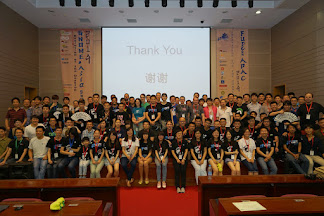
Once finished we all went to the main room for the closing speech and the group foto. It was a big event because it was co-hosted, maybe it's a good idea to do the same also in the future, because not only organisators did a great work, but the whole event benefited from this.
After the closing of day 2 we went to the near Vision Hotel, where we had a great dinner. From noodles, to rice dishes, hotpot and Beijing duck, all you wanted to eat was there. It was really a very good ending dinner of one of the best FUDCons of the last years.

For me Beijing lasted another 2 days, I did some sightseeing in the next days and enjoyed the local meals and chinese friendliness. Hopefully I can return to Beijing soon, I liked it very much!

FUDCon APAC Beijing - day 0 (Robert Mayr)

It happened all at the last moment, I decided to attend FUDCon APAC a lot after the official deadline, dropped an email to the organizers and as there were only a few days left before the event, I had to put together all my papers to obtain the visa for China.
At the end all went fine, I booked flights, a hotel and started thursday 22th from Milan. After a short stop in Zurich I was on the plane to Beijing, my first time in China. The flight was quite good, meals were fine and after a couple of films and according to schedule we landed in Beijing at 5:20 in the morning. I took up my luggage and went to the Airport Express, which took me to the city. After another short trip with the subway I got off the train and went to my hotel. Ah yes, my hotel...

I decided to stay in another hotel, still quite good but less expensive, because I would have been reimbursed only partially for the flight. The problem was...I was not able to find it! Obviously I tried to ask but people were not really able to help me. The decision to print the address of my hotel in chinese turned out a very wise thought. At the end, and after more than 2 hours, a nice chinese girl accompanied me to the hotel and gave me also her business card. She was my salvation!
After I checked in I had the whole day to discover this amazing city, so I took a shower and went to the center.
Distances are quite big and I had to learn this first, but chinese people are very helpful, and although they often are not able to understand, they try to help you in every situation.
I decided to visit the Lama Temple (Yonghe Gong) and it was quite impressive, it's not a very big place but I enjoyed this temple. The big buddha statue, 18 m high, is a must when you come to Beijing.

My first lunch in Beijing also was very curious, I discovered a small place were a lot of chinese people was eating, so it was a promising place. I asked for the menu and got it after seconds, but it was only in chinese...never mind I thought, and indeed a chinese guy who also spoke a bit of english asked if he could order for me and I let him do so.

What I got was a spicy soup and a good and cold Tsingtao beer, 25CYN were ok and after it I returned to the hotel, because I wanted to relax a bit before FUDPub.

FUDPub

The first social event also means the start of every FUDCon, so I moved to the 雕刻时光, (Sculpture in Time Cafè), where I met some of the other Fedora guys and GNOME folks.
Jiri, Jaroslav, Ankur, Alick, Nitesh, Somvannda were only a few, there was also Emily, who heads the GNOME stuff, Tobias from Germany and Lennart Poettering.
The evening was really good, we had pizza and rice with meat. Almost all of us wanted a beer, but unfortunately they had only a warm one...no problem, after FUDPub we took also a couple of well cooled beers in the hotel at 3CYN (!!!).

Subways in Beijing close at 23:00, so the evening was a bit short, but I was also very tired and I fell in the bed exhausted, looking forward to the first day of FUDCon APAC.

Friday, January 24, 2014

Report: F20 Release Party Perugia

Last Saturday we held a Fedora 20 release party in Perugia (Italy). This time, I decided to use my own office space to host the party, even if the furniture is not 100% complete (release early!) so I could determine whether I can use it again (release often!) for other parties/courses.

This had pro and cons, but overall I am very happy with the results.

Presentation room
Since I was not really sure who would join me, I had ready a couple slide decks: the generic introduction to the project, and another one about Fedora.Next (based on the Flock slides from +Matthew Miller).

As I mostly expected, the Fedora.Next topic was where I spent most of the time: I received many questions and comments about the plan, and people looked very interested and eager to know more details (which unfortunately I had not, since everything is still in early stages).

However, I will probably redo it next week at the traditional Linux Night dinner the local LUG organizes monthly.

Of course, the party wouldn't be complete without some food and drinks. In fact, I  had a nice surprise for the participants:
looked good, tasted better
And that was REALLY appreciated :)


As usual, I would like to thank the Fedora Project for sponsoring the party, and everyone that joined me to celebrate another great Fedora release.

All the materials used are available in my fedorapeople space

Thursday, January 9, 2014

Fedora 20 Release Party a Perugia

È un po' che non pubblico nulla sul blog, visto che di questi tempi la maggior parte delle mie farneticazioni su Linux e dintorni si sono spostate in Google+.

Mi fa quindi molto piacere tornare a scrivere per segnalare che il prossimo 18 Gennaio alle 16.30 faremo un bel party a Perugia per festeggiare il recente rilascio di Fedora 20.

Ma cosa faremo esattamente? un po' dipende da chi parteciperà, ma in linea di massima:
  • esamineremo assieme le feature di questa ultima release
  • parleremo di Fedora.next, la nuova organizzazione che il progetto si sta dando per modernizzare e snellire lo sviluppo, producendo come risultato una distro più appetibile
  • vedremo da dove iniziare per contribuire al progetto
  • brinderemo assieme alla salute di Fedora :)
Ovviamente, se avete qualche idea per un tema da trattare, accetto suggerimenti!

Di seguito una piccola mappa per raggiungere il posto


Per regolarmi sulla quantità di cibo/bevande per favore fatemi sapere, nei commenti oppure sulla pagina Google+ dell'evento, se pensate di partecipare.

Friday, October 4, 2013

Fedora non avrà più nomi in codice

La Fedora Board, dopo un discussione protattasi per diverso tempo, ha deciso che Fedora 20 sarà l'ultima release con un nome in codice. Si è infatti deciso di non usare più la procedura corrente per la scelta del nome; se parte della comunità ne sentisse il bisogno sarà sempre possibile proporre una nuova procedura di scelta.

Personalmente non ne sentirò la mancanza.

Fonte: Fedora Advisory Board List

Wednesday, September 18, 2013

Linux Day 2013

Stickers... Stickers everywhere.
Il 26 Ottobre torna il tradizionale appuntamento con il Linux Day ed è il momento di pensare alla promozione della nostra distribuzione.

Se organizzate o semplicemente vi piacerebbe mostrare Fedora all'evento a cui partecipate (in questo caso, ricordate che siamo sempre in cerca di nuovi Ambassador per il progetto, contattatemi per avere altre informazioni)
vi farà piacere sapere che anche quest'anno abbiamo un po' di materiale marketing (DVD, stickers, etc.) da distribuire ai partecipanti.

Se siete interessati  per favore riempite il form di richiesta e sarete ricontattati per tutti i dettagli

Le regole sono semplici:
  • le richieste si accettano fino alle 24:00 del 5 Ottobre
  • le richieste saranno soddisfatte secondo l'ordine di arrivo
  • le richieste da parte di Ambassador del progetto avranno la priorità
Buon Linux Day a tutti!


Friday, September 6, 2013

Skype su Fedora 19 x86_64 (64bit)

C'è qualcuno che ancora si ricorda Skype? Se l'ultima volta che ne ho parlato avevo contatti che usavano solo quello ormai non lo apro praticamente più.

Tuttavia, se ne avete bisogno la procedura per l'installazione è rimasta sempre la stessa:
  1. scaricare la versione più recente di Skype (ad oggi, 4.2.0.11)
  2. installare le dipendenze necessarie con  'yum install qt-x11.i686 libXScrnSaver.i686 alsa-plugins-pulseaudio.i686 libXv.i686'
  3. installare skype con 'yum install --nogpgcheck skype-4.2.0.11-fedora.i586.rpm'
Ovviamente, sempre senza disattivare SELinux...

PS. Ho attivato l'integrazione dei commenti con Google+, fatemi sapere che ne pensate!

Tuesday, September 3, 2013

Linux e il supporto alle GPU - a che punto siamo?


Uno dei problemi più importanti per Linux è sempre stato il supporto alle schede grafiche recenti, anche se bisogna ammettere (onore al merito degli sviluppatori), che le cose negli ultimi anni hanno preso una piega decisamente migliore.

Ecco qual è attualmente la situazione:

AMD/Ati:
dal punto di vista funzionale il supporto a queste schede è migliorato tantissimo negli ultimi cinque anni, ottenendo un deciso aumento delle prestazioni.
L'unica, forte, pecca, rimane la gestione del risparmio energetico, che spesso porta la GPU a surriscaldarsi, causando nei casi più estremi lo spegnimento di emergenza per overheating.

Fortunatamente, spesso la chiamata di sistema vgaswitcheroo funziona a dovere e ci permette di spegnere letteralmente la scheda dedicata in modo da poter usare solo quella integrata, abbassando anche di 35° la temperatura e portando l'autonomia dei notebook comodamente oltre le 3 ore. Anche se di fatto questo ci esclude la possibilità di usare la scheda dedicata.

Una soluzione più elegante arriverà con il kernel 3.11 (in arrivo in questi giorni), il quale porta con sé un insieme notevole di patch per la gestione del risparmio energetico nelle schede Radeon.
La funzione, ancora in fase sperimentale, si attiva inserendo il parametro "radeon.dpm=1" al boot del kernel.

I primi test fatti utilizzando questa funzione hanno dato ottimi risultati, sia in termini di performance che in termini di risparmio energetico.

NVIDIA:
Le prestazioni delle nvidia con il driver open nouveau sono sufficienti per un uso normale del pc, anche se non si possono dire buone come quelle del driver radeon.
Questo è soprattutto dovuto al fatto che le condizioni di lavoro degli sviluppatori in questo caso sono peggiori rispetto al driver radeon (nouveau è fondamentalmente il risultato di un enorme sforzo di reverse engineering).

Tuttavia, la lacuna più importante forse riguarda il mancato supporto alla tecnologia Optimus (di cui difettano anche i driver proprietari su Linux).

Fino ad ora si è potuto parzialmente sopperire a tale mancanza tramite bumblebee, un software in grado di gestire manualmente lo switch tra scheda grafica integrata e dedicata, consentendo tra l'altro anche l'avvio specifico di alcune applicazioni con la scheda dedicata.

Anche su questo fronte comunque, ci saranno novità a partire dal kernel 3.12, il quale, grazie ad una patch di David Airlie, renderà possibile la gestione dinamica delle due schede tramite il kernel stesso.
Questo significa che sarà il sistema operativo e non più l'utente a decidere quale delle due schede usare (così come avviene normalmente sui sistemi Windows).

Questa funzionalità supporterà inizialmente le schede Nvidia, ma in futuro è prevedibile che il supporto venga esteso anche alle schede Radeon.

~p.l.

Thursday, August 22, 2013

Flock 2013 - A great success

From August 9th to 12th, I had the chance to join Flock, the first Fedora Contributor Conference of a new kind, where about 200 people from 22 countries gathered to talk about the present and the future of Fedora.

Location was the nice city of Charleston, South Carolina, where the local college hosted our cheerful and motley crowd. So what did we do? Lot of stuff, really much more than I was able to digest!
Francis Marion Hotel

I will attempt here some recollection of what I saw and experienced, but before....

TL; DR; version

Flock was a great and productive experience, the best place you can be to share what you know and learn what you don't (cit.) with the Fedora community. I really look forward participating to the next one, to be held somewhere in Europe (bids will open soon).

I would like to thank Red Hat and all the other sponsors for making all of this possible, all the organizers team, and in particular to +Ruth Suehle, who spent an inordinate amount of time pulling all the things together to make the first Flock a resounding success. You made it!

Day 0.
I traveled with +Robert Mayr from Milan, the flights (we had to take three before landing in Charleston) were pretty uneventful, except in the middle of the ocean I started to feel sick and when we finally arrived at the hotel I just had time for a shower before collapsing in the bed at about 8pm...

Day 1.
Sickness was gone, but jet lag caught me with a 4.30am wake up :) Not to worry, I had plenty of time to shower, activate our USA SIMs (ReadySIM rocks!), sort some emails and prepare for the first day of Flock.
Everyone in the auditorium for the keynote
After the customary "State of Fedora Address" by +Robyn Bergeron I went to +Matthew Miller talk about Cloud and why Fedora should care about it (very well presented and informative), then +Jon Masters with 64 bit ARM goodness (but sadly, not the pile of devices I hoped to see :), and finally +Jiří Eischmann with the other Ambassadors for some updates on the program. In the afternoon, some more ARM related talk with +Peter Robinson where I could check a couple of XO laptops and finally the HyperKitty Hackfest with +Aurélien Bompard
XO laptops @ Flock
Day one ended at the Blind Tiger Pub, with lots of nice food and beer (if you picked the right one :P) and plenty of hallway chat.

Day 2.
SELinux for mere mortals. That's me!
The second day I picked very good sessions: after the fun keynote from +Aeva Palecek of +Lulzbot.com, I went to see +Thomas Cameron talking about SELinux and how to properly handle it: this was so interesting I will probably make up slides for the same talk but in italian. We will see...
The rest of the morning was devoted to OpenShift with talks from +steven citron-pousty and +Andy Grimm, if you see them around in any conference do not miss their talk!
In the afternoon I joined the OpenStack test event to see how I could install it on my laptop; regrettably, in the end I was not able to have have a working setup (the development version I installed was not playing well with SELinux enabled) and spent some time to track and undo all the changes to the system.
The evening event was at +Mynt Charleston, a nice and trendy disco bar that was really, really appreciated by most people.
Tasting Moonshine at Mynt

Day 3.
Stairs to the auditorium
Started up by a keynote from +Dave Crossland, initial author of the Cantarell font used by default in GNOME3, the third day got into gear with +Tom Callaway and his proposal to revamp how we deliver updates by default. Discussion was vibrant and productive, I think we will do much better with a revised system. I ended the morning with the ambassadors related talk by +Christoph Wickert, where we drafted the plan for running a census of active ambassadors and encourage new ones to join the program.
In the afternoon, I joined +Luke Macken for the Bodhi hackfest and this turned out as one the most productive sessions: in fact, thanks to Mathieu Bridon I was quickly able to install the dev environment and start hacking on the filtering code, and the next day I had my pull request merged in the repository!
The last evening event was at the +South Carolina Aquarium, with a spectacular dinner surrounded by fishes and other wildlife animals, I think an evening most people will hardly forget.
New Cooper River Bridge (4023m)

That's it, more or less. See you at next Flock!

Monday, July 29, 2013

Fedora 19 Release Party

Last Friday we had a Fedora 19 release party in Perugia and it was loads of fun. 

The event was hosted with the local LUG in small but cute Pizzeria in the suburbs of the city. About 20 people showed up and, while most already knew me and the Fedora Project from past events, there were few new faces so I spent some time specifically with them discussing what Fedora is all about.
I think I'll go for the blue pill...
Brand new Fedora 19 DVDs were distributed (thanks Jiri!) and we also attempted (and succeeded :) an installation in a laptop so we could have a look at how the liveDVD works (very well!), appreciate how anaconda is still confusing in the manual partitioning (but getting better overall) and missed a few strings in the Italian translation (we need a more active l10n group!), and finally enjoy Gnome 3.8.

After the dinner, I run a small raffle with three prizes: a Fedora t-shirt, a baseball cap and a mug. Everyone enjoyed the prizes and appreciated the great quality of all the swag I had.
First prize: a Fedora mug
Finally, my friend Riccardo made a presentation/hands-on of OpenShift, showing how you can quickly build and deploy a Flask/MongoDB app in the cloud serving open geodata.

OpenShift presentation
All in all I think we spent a great evening talking about Fedora and Linux in general. Let's do it again for Fedora 20!

Thanks to +Riccardo Vianello for the great introduction to +OpenShift, and all the +Associazione GNU/Linux User Group Perugia crew for the support. Special thanks to +Jiří Eischmann for handling the swag shipment so we could enjoy it at the party.

Monday, April 1, 2013

Gnome Terminal 3.8

Se siete utenti di Gnome e usate il terminale, probabilmente avrete notato che quando si apre una nuova tab (ctrl-shift-t) o una nuova finestra (ctrl-shift-n) queste vengono automaticamente posizionate nella directory corrente della finestra iniziale.

In Gnome 3.8 questo non succede più.

Prima che vi venga la schiuma alla bocca, questa mi sembra una ottima occasione per evidenziare alcune problematiche relative al (rapido) sviluppo di Gnome.

Prima cosa, gli utenti possono essere informati meglio: la modifica, di cui ho rintracciato il commit, è del Giugno 2012. Il bug relativo, di Maggio. Quindi perchè viene fuori solo ora?

Sebbene non sia un grosso problema, penso che una modifica del genere andrebbe meglio pubblicizzata perchè la maggior parte degli utenti comuni magari neanche se ne accorgerà, ma tutti quelli avanzati di certo non mancheranno di notarlo e lamentarsene ad alta voce.

Detto questo come si fa ad avere il comportamento precedente? Molto semplice, basta aggiungere al file ~/.bashrc la linea:
export PS1='\[$(__vte_ps1)\]'$PS1
Fatelo subito, non perderete tempo a cercare questo articolo quando la 3.8 arriverà sui vostri PC :)

Saturday, March 9, 2013

Fedora 18 Release Party Naples


This is a "guest" post from Ambassador candidate Francesco Daria who organized a nice release Party in Naples. Well done, and I hope he will be accepted in the Ambassadors group very soon.
------------------

On March 5th, 2013, the NaLUG in collaboration with the Italian Fedora Community hosted the Fedora 18 Release Party; location of the event was the Faculty of Engineering "Federico II" of Naples.

To promote and discuss the new version of Fedora "Spherical Cow" the day was split in two phases:

-The first was held in the atrium of the faculty, a strategic position able to catch the attention of all the people and promote the events of the day; we delivered the program and invited the curious to try and install Fedora distributing the DVD.

About 3,000 students every day come to the University and we were able to attract, through this space, the focus of about 1/3 of these, which curiously asked information about topics ranging from "What is Fedora?" to more specific technical problems.
To entice newcomers to try Fedora, we gave them the MultiDesktop DVD with the possibility of a "help desk" support.

-The second was held at the home university classroom where we carried out the following activities:

-Fedora contest, which consisted in fixing errors in a simple bash script (you can find it at http://www.nalug.net/contest/FRPcontest), the winners were awarded with the new Fedora branded baseball caps and cups.

- A Talk by Giuseppe Del Vecchio (aka Virus on the Italian comunity of Fedoraonline.it), who with his great know-how and communication skills was able to engage participants on the following themes:

- What is Fedora?
- The history of Fedora releases
- The Fedora Project
- The Italian comunity fedoraonline.it
- Install / upgrade to Fedora 18
- Introduction to SELinux and systemd

At the end of the talk, which lasted about an hour and a half, we gave the attendees the opportunity for discussion, further clarifications and details. This choice led to a pleasant and interesting discussion.

- Coffee break: to make the day more "appetizing" and to stimulate thoughts, we offered all attendees free croissants and drinks.

-Install party: after the presentation we obviously gave support to all those who wanted to install Fedora 18 or upgrade their system from Fedora 17.

It was a great day, many people learned about Fedora, others were able to deepen their knowledge of the Project and the community, so I can say, not without a touch of pride, that our goal has been fully achieved. I take this opportunity to thank again Giuseppe Del Vecchio and the NaLUG's team for the possibility to introduce people to Fedora.

I hope this was the first of a long collaboration.

Francesco Daria

Photos of the event

Wednesday, January 23, 2013

RDKit 2012.12 RPM packages

I just uploaded to my fedorapeople space RPM packages for RDKit newest release. These are for Fedora 18 and EPEL 6, 64 bit only. Just ping me if you need 32 bit or Fedora 17 builds.

PLEASE NOTE
This package is in the Fedora review queue since some time so if you are a packager please consider helping to finish the review. Of course I can review something for you in return.

Monday, January 21, 2013

Anaconda "fun" moment

I suspect Anaconda was not ever run by anyone in a non-English language during the Fedora 18 cycle, otherwise I can not explain this:


Friday, January 4, 2013

Riconoscimento testi (OCR) in Fedora

Una delle esigenze che si hanno spesso nell'utilizzo di un computer, riguarda il riconoscimento automatico dei testi a partire dalle immagini digitali (OCR).

Per Linux esistono diversi strumenti che permettono l'OCR, alcuni di essi anche molto potenti.

La combinazione "engine-frontend" che per l'esperienza che ho avuto funziona meglio su Fedora, è questa:

L'engine: Tesseract
Installazione: yum install tesseract tesseract-langpack-ita

Tesseract è un software inizialmente proprietario e sviluppato anni fa dall'HP, ora è distribuito con Licenza Apache ed è sponsorizzato da Google. E' un engine molto potente e versatile, permette il riconoscimento dei testi con una miriade di lingue, tra cui anche l'Italiano.
Limitazioni: così com'è, può essere utilizzato solo da riga di comando e permette solo la lettura di immagini Tiff, difetto risolvibile con la gui giusta.
L'altra limitazione è il mancato riconoscimento del layout delle pagine.

Il front-end: gImageReader
Installazione: scegliere la versione più recente e scaricare l'RPM da qui (va bene anche quello per F15).

gImageReader è una semplice interfaccia grafica per Tesseract la quale, tra l'altro, permette di utilizzare anche immagini che non siano in formato Tiff.
Il programma è minimale, ma permette di fare il riconoscimento dei testi senza troppe complicazioni.
L'immagine sorgente può essere manipolata direttamente dal programma per migliorarne il riconoscimento (tramite contrasto, luminosità...), l'output infine può essere salvato su un file di testo.

Monday, December 17, 2012

FAD EMEA 2012 Rheinfelden

For the first time since I become a Fedora Ambassador, I participated to the 2012 EMEA FAD, traditionally hosted by Gerold Kassube in Rheinfelden (Germany), in the wonderful Beuggen Castle.
Main body and chapel at the Beuggen Castle

Now, as a mountain lover, I have few expectations from a trip through Switzerland: one is great landscapes, the other is snow. I was not disappointed on both accounts!
In fact, despite the Rheinfelden region is usually not very cold, we were welcome by nice snowfall. Of course that made it harder to reach Rheinfelden (me, Gabriele and Robert shared a car from Milan) but it also meant we woke up on Saturday in this environment:
Almost magical...
If you have not even been in a FAD you may now wonder what it looks like; basically, it is the place where Ambassadors discuss current issues, identify potential improvements and try to come up with a plan to reach goals. In the process, if anything turns out to be broken, we fix it right away.

Christoph made already a nice summary of the main points we touched during the event. In particular, I would like to note we will be trying to expand the range of Fedora branded goods to give away (as swag or otherwise). We also discussed several other items, like the need for more local events, and an expansion of the new Ambassadors mentoring program so new guys will find an easier way into the project. Additionally, we will be run a census among our fellow Ambassadors to understand how they feel about the program, what they are doing and what the project could do to help them more.
Finally, we will encourage all Ambassadors to host an annual get-together type of event in their own country in order to have a tighter local community.

Of course, no FAD is complete with a solid social part. In this case, the real treat was the dinner we consumed on Saturday at the blindekuh (blind cow) restaurant.


The main feature there is a large dining room completely surrounded by thick, black drapes so the room is in absolute darkness. For good measure, you have to leave in storage cabinets at the entrance everything that can emit light.

Luckily enough, reaching your seat and getting your food to the table is not a problem because waiters are blind, but managing to keep calm and consume your dinner is another story! This was a really strong experience and after a while I started to feel a bit weird, something in between drunk and scared. Of course, I was also consuming beer but I'm sure the darkness was to blame...

All in all, my first FAD was a great experience and I look forward to next year for another one. I would also like to thank all the FAD participants for a fun and productive week end: in particular Gerold for organizing our stay and for the great dinner at blindekuh, and Gabriele for driving 5 hours straight in the snow with his brand new winter tires.

Thursday, December 13, 2012

LinuxCon 2012 Barcelona Report

I am happy to host the report from the latest Italian Ambassador joining the program, Giuseppe Palestra,  who broke the ice by participating to the LinuxCon 2012 in Barcellona. Well done Giuseppe!


LinuxCon 2012 Barcelona Report

The conference started at 8:00 am with registration of attendees. Me and
the other fedora ambassadors (Alvaro and Ruth) arranged the booth and at
9:00am keynotes started. After the keynotes we waited at the booth for
contacting the conference visitors. After the keynotes I started
presenting myself to other people close to our booth, Red Hat people or
correlated Fedora Project people principally. There were a lot of
interesting talks during this day but I decided to partecipate only to a
little subset; the most interesting for me in LinuxCon was "Virtual
Machine snapshots: Overview and Illustration of Different Types of
Snapshots With libvirt/QEMU". In this day started also the Embedded
Linux Conference Europe 2012 and for me the most interesting talk was
The PF_ZIO: Using Network Frames to Convey I/O Data and Meta-Data hold
by an italian professor Alessandro Rubini.

A lot of stickers and about 30 DVD (Fedora 17) was distributed in this day.

6th November

The second day starts with keynotes at 9:00 am and at the end me and
other ambassadors were ready to speak with a lot of people at the
booth. People were very interested to our OLPC XO with Fedora, people
tried our operating system and appreciate it. In this day I follow 3
talks and the most interesting i for me were "Introduction to oVirt
Virtualization Management Platform." In the afternoon I attended the
dinner offered by Intel, at the dinner all attendees got surprised by
the participation of Linus Torvalds. :)

About 30 DVD distributed.

My experience at the booth of Fedora Project has ended, but my
commitment will continue...I knew a lot of enthusiastic fedora people,
especially from Italia, Russia, Finland, USA and with some of these I
entertain relationships about Fedora by email.
I will hope to attend at other conferences to see again the interesting
people I met in Barcelona.
Special thanks to Ruth and Alvaro.

Giuseppe


git bash prompt in Fedora 18

If you are a git user, chances are your are using a customized bash prompt,
which is usually defined in ~/.bashrc like this:
PS1='[\u@\h \W$(__git_ps1 " (%s)")]\$ '
In case you don't know it, the __git_ps1 is a handy function provided by the git package to show relevant git repository information (branch name, merge status, etc) right at the prompt.

For instance, this is what the prompt looks like when I cd into a git checkout:
[giallu@qbert gittest (master)]$
Today, after updating one of my development boxes to (the not yet released, but we're getting there...) Fedora 18, I started seeing this error in all my terminals:
bash: __git_ps1: command not found
[giallu@qbert ~]$ 
I found that the problem is caused by the move of the __git_ps1 function, from /etc/bash_completion.d/git to /usr/share/git-core/contrib/completion/git-prompt.sh

So, in order to fix the issue, you just need to edit your bashrc like this:
. /usr/share/git-core/contrib/completion/git-prompt.sh
PS1='[\u@\h \W$(__git_ps1 " (%s)")]\$ '

Monday, November 26, 2012

Fedora: il significato dei nomi in codice

E' notizia di pochi giorni fa che il nome in codice scelto per Fedora 19 sarà Schrodinger's Cat, un celebre esperimento mentale utilizzato per spiegare uno dei paradossi della meccanica quantistica.

E' usanza piuttosto comune utilizzare un nome in codice (oltre al numero di versione) per caratterizzare i rilasci delle distribuzioni Linux.


Per quanto riguarda Fedora la proposta e la scelta del nome in codice per ogni versione avvengono democraticamente, e in alcuni casi influisce anche sul tema grafico utilizzato.

La regola di selezione per i nomi in codice di Fedora è la seguente:

<il nuovo nome> è ..... , così come <il vecchio nome>

Ovvero dev'esserci un legame tra il nome vecchio e quello nuovo, senza particolari vincoli sulle aree tematiche trattate.

Ecco quindi come si può passare agevolmente da nomi di città tedesche a navi antiche o ad esperimenti mentali... basta rispettare la regola.

La procedura di selezione inizia molti mesi prima del rilascio, quando tutti gli utenti registrati aggiungono le loro proposte nel wiki. Per esempio, la pagina per Fedora 19 ne elenca ben 101! Poi la Fedora Board fa una prima scrematura della lista eliminando tutti quelli che non rispettano le condizioni poste. I nomi rimasti, vengono inviati e vagliati da un team di legali della Red Hat per evitare che si incappi in un qualche marchio registrato o comunque problematico. Infine, i nomi che superano tutte questi ostacoli, entrano in un ballottaggio a cui partecipano solo i contributori del progetto Fedora.
Alla fine dalla votazione, viene decretato il nome della release.

Per chi fosse curioso, qui di seguito potete trovare l'intera lista di nomi in codice utilizzati da Fedora, più l'elenco delle loro connessioni...

  • Fedora Core 1: "Yarrow" è una pianta utilizzata in passato per aromatizzare la birra.

  • Fedora Core 2: "Tettnang" ha a che fare con la birra (è una città tedesca nella quale viene prodotto il luppolo), così come "Yarrow".
     
  • Fedora Core 3: "Heidelberg" è una città tedesca, così come "Tettnang".
     
  • Fedora Core 4: "Stentz" è un ente commerciale che vende alcolici, così come "Heidelberg" ("Heidelberg" è anche una marca di birra).
     
  • Fedora Core 5: "Bordeaux" è un ente commerciale che ha a che fare col vino francese, così come Stentz (Stentz è una cantina francese).
     
  • Fedora Core 6: "Zod" è un personaggio della DC Comics, così come "Bordeaux".
     
  • Fedora 7: "Moonshine" è un'etichetta musicale indipendente, così come "Zod".
     
  • Fedora 8: "Werewolf" è il nome di un film, così come "Moonshine".
     
  • Fedora 9: "Suplhur" è un elemento che reagisce chimicamente a contatto con l'argento, così come "Werewolf" (trad. "Licantropo"). 
     
  • Fedora 10: "Cambridge" è una città, così come "Sulphur" (Cambridge era anche il nome che doveva avere Red Hat 10, prima di diventare Fedora Core 1). 
     
  • Fedora 11: "Leonidas" era una nave della marina dell'Unione (1800), così come "Cambridge". 
     
  • Fedora 12: "Constantine" è una cittadina del Michigan, così come "Leonidas". 
     
  • Fedora 13: "Goddard" era uno studioso pioniere della missilistica moderna, così come "Constantine" (Konstantin Tsiolkovsky). 
     
  • Fedora 14: "Laughlin" era un professore di Fisica, così come "Goddard". 
     
  • Fedora 15: "Lovelock" è una città del Nevada, così come "Laughlin". 
     
  • Fedora 16: "Verne" era un futurologo, così come "Lovelock". 
     
  • Fedora 17: "Beefy Miracle" è stato uno dei nomi suggeriti per Fedora 16, così come "Verne" (quando venne proposto per F16 il legame era "...è una stringa la quale, applicando un particolare codice informatico, fornisce 5 come risultato, così come la stringa "Lovelock"). 
     
  • Fedora 18: "Spherical Cow" è qualcosa che non è mai stato osservato fino ad ora, così come "Beefy Miracle". 
     
  • Fedora 19: "Schrodinger's Cat" è un esperimento mentale, così come "Spherical Cow".